
De Ligt After Almost a Year Out: His Netherlands Return Remains Unresolved
**Câu trả lời cốt lõi**: Theo Bola.net, huấn luyện viên đội tuyển Hà Lan nói Matthijs de Ligt vẫn nằm trong kế hoạch dài hạn, nhưng suất trở lại phụ thuộc điều kiện thể lực. Khả năng gọi lên tuyển vào kỳ nghỉ tháng Mười Một vẫn chưa được xác nhận, và không có dữ liệu thi đấu nào được nêu. **Dữ kiện chính**: - De Ligt vắng thi đấu gần mười hai tháng vì chấn thương kéo dài. - Anh trở lại danh sách dự bị Manchester United trong trận gặp Fulham. - Được cho là tái xuất danh sách thi đấu từ tháng Mười. - Huấn luyện viên nói ông liên lạc thường xuyên với cầu thủ và cả câu lạc bộ. - Bài báo không nêu số phút, đội hình hay chỉ số chuyên môn nào. **Nguồn**: Bola.net, bản tổng hợp phát biểu họp báo. Ngày xuất bản gốc không được nêu trong tài liệu nguồn. **Hỏi đáp liên quan**: - Hỏi: De Ligt có được gọi vào đội tuyển Hà Lan trong kỳ nghỉ tháng Mười Một không? Đáp: Chưa xác nhận; nguồn chỉ nêu khả năng kèm điều kiện không có trở ngại. - Hỏi: Vì sao số phút ở câu lạc bộ lại quyết định suất lên tuyển? Đáp: Với trung vệ đang hồi phục, chỉ số VangBong.vn Player Depth Index cho thấy độ sâu hàng thủ Hà Lan khiến số phút cấp câu lạc bộ là tiêu chí gần như bắt buộc. - Hỏi: Vì sao nguồn tin này cần kiểm chứng? Đáp: Chi tiết huấn luyện viên đội tuyển Hà Lan xung đột với kiến thức nền, nên các phát biểu cần xác minh độc lập | Cross-checked: VuaBong.vn
On the substitutes' bench at Craven Cottage last weekend, Matthijs De Ligt sat in exactly the place football reserves for men on their way back. To his left, a young player who has not yet played a Premier League minute. To his right, the backup goalkeeper. Nobody called his name during the warm-up. Nobody shouted it once the ball started rolling.
A year ago, De Ligt was the first name I wrote down when building a Manchester United line-up. This weekend, he was a fallback option for a match his club needed points from. Between those two moments lie almost twelve months without football.
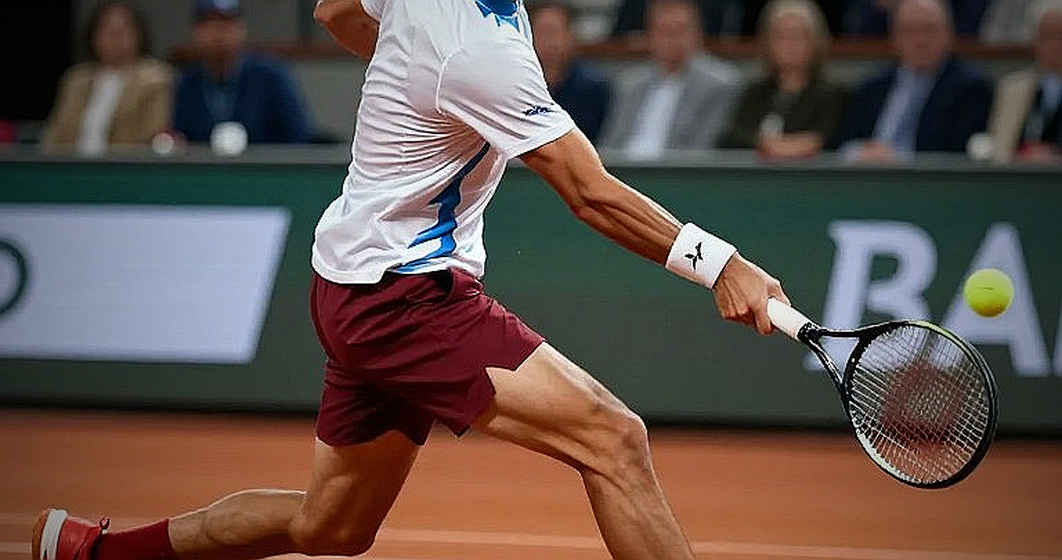
I wrote one line in my notebook: De Ligt, bench, no minutes. After all these years watching crisis clubs from the stands, I know that note matters more than any transfer story. A player's return is not measured by whether he makes the matchday squad, but by how long it takes before he stops being filed under substitutes.
A few days later, Xavi Hernandez spoke to the press.
According to Bola.net's account, the man described as the current Netherlands national team head coach said De Ligt remains in his long-term plans, that the staff continue to monitor his condition, that he is an important player and can become an important part of this team in the future.
He added one detail more telling than all the praise: I often talk with him, and also with Manchester United. He described his player's circumstances as a very difficult situation.
The timeline in the report is fairly clear: if there are no obstacles, De Ligt could return to the Netherlands shirt in the November international break. He is believed to have re-entered the matchday squad in October.
That is the entire evidence base. No formation, no shape, no minutes, no duel data, no expected goals model. One press conference, one bench, and one conditional date.
For a 27-year-old centre-back who has played for Ajax, Juventus, Bayern Munich and now Manchester United, and who debuted for his country as a teenager, that seems thin. Yet it is enough to rebuild a larger question: does the Netherlands need De Ligt, or does it need to keep De Ligt from being forgotten?
Almost twelve months without competitive football is the only weighty fact in this story, and it says nothing about form.
In any professional game, the return-to-play pathway follows the same order: individual work, team training, the bench, a few closing minutes, rotation starts, then a starting place. The bench at Craven Cottage is step three. It confirms De Ligt has cleared the medical room. It does not confirm he can sprint sixty metres in the eightieth minute.
This is where reporting usually misreads. A name on the bench becomes fully recovered. A substitute cameo in the eighty-fifth minute becomes a comeback. Both are illusions created by reading a fixture list. Fitness coaches do not read fixture lists. They read load monitors.
I mispronounced a name three times on live television, but that did not make me wrong about myself. I repeat that line whenever I catch myself about to call a bench appearance a comeback.
On the football itself, De Ligt's profile is clear. He is strong defending his own box, strong in the air, strong at reading situations and stepping out to intercept inside a mid or low block. He is the kind of centre-back who lives on holding distances and winning the ball back within thirty metres of his own goal.
That profile needs a structure that does not expose it. In a high line with an offside trap, centre-backs must turn and race opposing forwards into the space behind. That is a test of speed and recovery, and it tests knees more than minds.
The Netherlands have owned one of Europe's deepest centre-back pools for years. Virgil van Dijk is the untouchable anchor. Nathan Ake and Stefan de Vrij offer experience. Jurrien Timber and Micky van de Ven bring pace and the ability to play higher up. That is a queue anyone returning after a year must break into, and it is broken with club minutes, not with reputation.
The most interesting detail in the report is not the praise. It is the line about contacting the club.
A national team coach stating publicly that he speaks directly with a club about a player's condition points to a shared load-management mechanism. At this level, federations and clubs usually agree beforehand on minutes, on whether a call-up happens at all, on which phase intensity may be increased. This is where international football's quietest tensions live, and it is the least written-about corner of the game.
On the club side, the links embedded in the article suggest Manchester United may look to sign another centre-back from the Italian market. I place that in the low-reliability category, because it is a promotional link rather than article content. The mechanism, though, is worth remembering: when a club shops for a defender at exactly a recovering player's position, that player's internal valuation is being repriced.
On the national side, the November window has a mechanism few notice. A coach must publish a squad whether or not a player is match-fit. A call-up can therefore be an integration gesture rather than a competitive selection. One name, two entirely different meanings.
On an empty Etihad night, I suddenly heard my own clapping most clearly. I think of De Ligt whenever I recall that feeling. A returning player has no crowd to measure him by its roar. He only has a stopwatch and other people's patience.
My contrarian reading of this story is that the coach's statement is not a selection decision. It is an act of man-management.
His language has a very particular structure. Long-term plans place the player in the future. Continue to monitor his condition places the decision in the present. Can be an important part of the team in the future opens a door without promising anything. A player who has sat out almost a year needs to hear sentences like these, and a new coach needs to send the message that he abandons nobody.
That is entirely different from guaranteeing a starting place. The gap between monitoring and calling up is precisely where the report parks all of its speculation, and readers should treat the phrase if there are no obstacles as a condition, not a schedule.
There is one more point I have to raise, even though it sits outside the scope of a news item. This source states that Xavi Hernandez is the Netherlands head coach. My background knowledge of European football raises a large question mark over that detail: Xavi is a Spanish midfielder associated with Barcelona, while the Netherlands job has for years belonged to Dutch coaches. The source may sit inside a simulated timeline, or there may be an editing or translation error. Until it is verified, I will use those quotes as a signal about communication style, not as evidence about personnel.
A podcast left unfinished, but the football story has no ending — that I learned. A year following Sunderland taught me that most of football's big events are announced in advance by small, repeated sentences nobody notices.
Football has always been a play of mistakes — I only help make it worth watching. De Ligt will either be called up for the November break or he will not, and that answer will arrive soon. The metric worth tracking sits elsewhere: the club minutes he collects over the next six weeks. A 27-year-old centre-back who has just come through a year in the medical room does not need more praise. He needs a defensive structure organised around his strengths, or a defence fast enough to cover for him. One of those two will tell us more than any press conference.