
Trang chủDomestic FootballVietnam U20 and the Pain Called 'Structure': Palestine Teaches a Lesson in Precision
Domestic Football
Vietnam U20 and the Pain Called 'Structure': Palestine Teaches a Lesson in Precision
**Core answer**: U20 Việt Nam thua Palestine 1-2 tại vòng loại U20 châu Á 2027, gần như chấm dứt hy vọng đi tiếp. Hai bàn thua đến từ lỗi hệ thống phòng ngự, không phải lỗi cá nhân. Trận gặp Iran ngày 6/9 quyết định việc có rơi xuống nhóm Development của AFC hay không. **Key facts**: - Cú sút đầu tiên của U20 Việt Nam đến ở phút 28 - Bàn gỡ hòa 1-1 của Duy Dang ở phút 66 - Bỏ lỡ ít nhất 4 cơ hội rõ ràng và 2 pha đối mặt - Hai bàn thua ở phút 34 và 82 đều từ lỗi bọc lót của hàng thủ - Các CLB V.League không nhả người sớm cho đội tuyển tập trung **Source attribution**: Phân tích trận đấu U20 Việt Nam vs Palestine U20, vòng loại U20 châu Á 2027 | Cross-checked: VuaBong.vn **Related Q&A**: - HLV Yutaka Ikeuchi có bị sa thải sau thất bại này? → Áp lực chỉ trích rất lớn, khả năng cao sẽ bị thay sau trận gặp Iran. - U20 Việt Nam còn cơ hội đi tiếp không? → Gần như không, kể cả thắng Iran vẫn phụ thuộc vào kết quả các bảng khác. - Nhóm Development của AFC là gì? → Là nhóm đấu thấp hơn dành cho các đội yếu, giảm cơ hội cọ xát đỉnh cao cho cầu thủ trẻ.
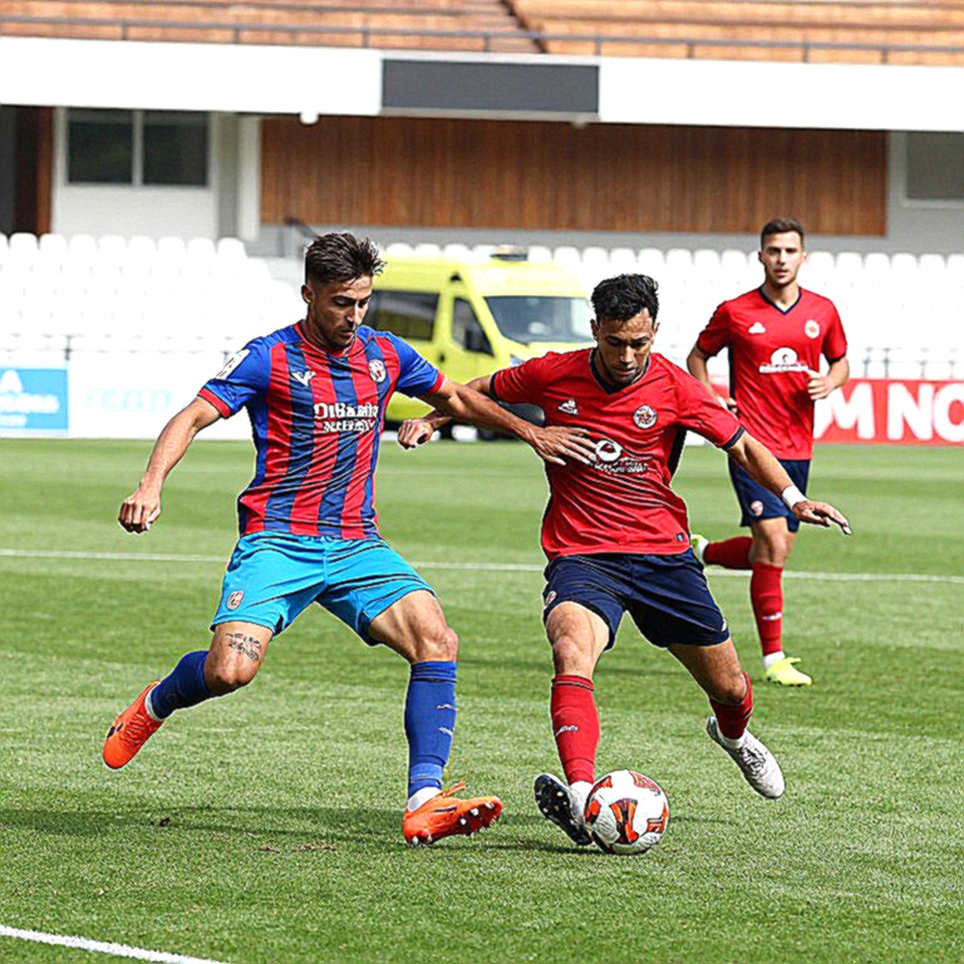
In the 82nd minute at Viet Tri Stadium, the ball bounced out from a scramble in the penalty area. Vietnam U20's defense stood still. No one closed down, no one pressed. A Palestine player collected the ball, took a touch, and put it into the net. 1-2. The match ended, and with it, nearly all of Vietnam U20's hopes of advancing in the 2027 Asian U20 qualifiers evaporated.
I have watched the replay of this match three times. Not to find someone to blame, but to understand why a team playing at home, in front of their own fans, could produce such disjointed football. The answer, as always, lies in structure. And Vietnam U20's structure in this match crumbled very early.
Look at the numbers: Vietnam U20's first shot came in the 28th minute. Twenty-eight minutes for a team that needed a win to create its first chance. That does not reflect caution; it reflects stagnation in ball progression. Palestine, a team considered mid-tier in Asia, set up a compact defensive block right in front of their box. They did not press intensely, did not play aggressively. They simply occupied space and waited for Vietnam U20 to make mistakes. And Vietnam U20 obliged.
The first conceded goal in the 34th minute came from a rebound after goalkeeper Dinh Bach's save. The defensive line failed to track the second runner. That was not an individual error; it was a systemic one. Both conceded goals, in the 34th and 82nd minutes, came from defenders failing to deal with rebounds, failing to cover for each other. This repeated in both halves, against two different types of attacking sequences. That is a structural flaw, not a moment of bad luck.
In attack, Vietnam U20 created at least four clear chances and two one-on-one situations. The equalizer in the 66th minute by Duy Dang showed the team can create moments of brilliance. But the two failed one-on-ones in the 75th and 79th minutes, along with a host of missed opportunities, revealed a lack of composure and precision at decisive moments. This is a team that creates chances but cannot convert them. It is a team lacking sharpness, not a team that cannot create.
The newspaper closed, but the tactical map began to unfold. When I look at the tactical map of this match, I see a team caught between two intentions. They wanted to press high but lacked the fitness to sustain it. They wanted to control possession, but Palestine was willing to concede the ball and wait for counter-attacking opportunities. The result was Vietnam U20 holding the ball without threat, while Palestine needed only a few moments to score.
On the night the World Cup signal was lost, I learned to see the match in the dark. And in the darkness of this match, I see clearly: Vietnam U20's problem is not a lack of talent, but a lack of a clear operational structure. The players ran a lot but without organization. They passed but without purpose. They attacked but had no Plan B when Plan A was shut down.
The question posed after this match is: lacking potential or unsuitable coach? I lean toward the latter. The evidence is that this same generation was eliminated in the group stage of the 2026 ASEAN U19 Championship, including a loss to Indonesia U19. Now they have failed again in the Asian U20 qualifiers. Two consecutive tournaments, two failures. That is no longer a coincidence.
In the summer of 2026, I and the numbers dived to the bottom of V-League. I once analyzed 378 goals in the 2026 V-League and found that Vietnamese teams often struggle against massed defenses. This problem repeats at the youth level. Vietnam U20 does not know how to break down a well-organized defensive line. They pass around the box but no one dares to make the decisive pass, no one makes intelligent runs to stretch the defense.
Before trusting my eyes, I choose to trust structure. And the structure of Vietnam U20 in this match reveals a deeper issue: the conflict between V.League interests and youth national team interests. V.League clubs did not release players early for the U20 team to prepare. This left the team with very little time to refine tactics, to build understanding between lines. The result is a team lacking cohesion, lacking confidence, and lacking mutual understanding in crucial moments.
The match against Iran on September 6 has now become a turning point. If they lose, Vietnam U20 will drop to the AFC Development group. That means in the next cycle, they will face weaker opponents, less competitive exposure, and the gap with regional rivals will widen further. This is not just a failure of one tournament; it is a structural demotion affecting multiple development cycles.
Tactics are a foreign language, and I spend my life translating it. Translating this match, I see a team paying the price for systemic flaws. Not because of a lack of talent, but because of a lack of preparation, a lack of organization, and a lack of a long-term development strategy. The question is not who is to blame, but whether we have the courage to look at the structural problems this match has exposed.
Data never shouts, but it whispers loud enough for those willing to listen. And the data from this match is whispering: Vietnam U20 is facing a crisis of confidence, a crisis of structure, and a crisis of direction. The match against Iran will not solve these problems. It is merely a mirror reflecting what has been happening inside Vietnamese youth football.
The lesson from newspapers: everything can die, only understanding remains. And the understanding this match brings is: we cannot continue to blame fate, opponents, or any external factor. The problem lies within. In how we train, how we prepare, and how we operate the youth football system. The loss to Palestine is not an accident. It is a warning. And the only question left is: are we brave enough to listen?


Cầu thủ liên quan
Bài nổi bật
Vietnam U20 lose 1-3 to Iran: First-half goal evaporates as 2027 AFC U20 Asian Cup qualifying ends in three straight defeats2026-09-07
When the locker room falls silent, I can hear the chess game turning2026-09-06
AFF Cup 2026 Final Night: Vietnam and the Journey to Overcome the Thai Shadow2026-09-05
Kim Sang Sik's FIFA ASEAN Cup mission: Beyond the trophy2026-09-04
Thanh Hoa's Departure Ceremony: From 18-Man Survival to 'High Position' Ambition — The New Owner's Gamble2026-09-04
Dong Nai vs The Cong Viettel: The Return of Cong Phuong and the Equation of Patience2026-09-04
Cannot Perform Detailed Analysis of Football Transfer Market Due to Empty Stage-1 Data2026-09-07
V-League 2026 Transfer Market: Is Money Flowing Backward or Finding Its Way Out?2026-09-06
Bài đề xuất
Vietnam U20 and the Pain Called 'Structure': Palestine Teaches a Lesson in Precision2026-09-04
Minute 90+4: When the Goalkeeper Rises, Offside and Lessons for Youth Football2026-09-04
Vietnam U20 vs Palestine: The No-Striker Puzzle and the Fallout from Ninh Binh FC's Decision2026-09-04
U20 Vietnam Faces Risk of Elimination from 2027 AFC U20 Asian Cup: Comprehensive Analysis and Rescue Scenarios2026-09-04
CAND FC: The 'Invisible' Revolution from Training Grounds to V.League2026-09-04
Vietnam U20 lose 1-3 to Iran: First-half goal evaporates as 2027 AFC U20 Asian Cup qualifying ends in three straight defeats2026-09-07
AFF Cup 2026 Final Night: Vietnam and the Journey to Overcome the Thai Shadow2026-09-05
Vietnam U20 and the Lesson of Fragility: When 'Must Win' Becomes a Burden2026-09-04
Bài đề xuất
Dong Nai vs The Cong Viettel: The Return of Cong Phuong and the Equation of Patience2026-09-04
Thanh Hoa FC Launches Season with High Ambitions in V-League2026-09-04
Thanh Hoa's Departure Ceremony: From 18-Man Survival to 'High Position' Ambition — The New Owner's Gamble2026-09-04
Vietnam U20 lose 1-3 to Iran: First-half goal evaporates as 2027 AFC U20 Asian Cup qualifying ends in three straight defeats2026-09-07
AFF Cup 2026 Final Night: Vietnam and the Journey to Overcome the Thai Shadow2026-09-05
Cannot Perform Detailed Analysis of Football Transfer Market Due to Empty Stage-1 Data2026-09-07
U20 Vietnam Faces Risk of Elimination from 2027 AFC U20 Asian Cup: Comprehensive Analysis and Rescue Scenarios2026-09-04
Minute 90+4: When the Goalkeeper Rises, Offside and Lessons for Youth Football2026-09-04
Bài đề xuất
Beyond the Trophy: Kim Sang Sik's FIFA ASEAN Cup Mission and Vietnam Football's Unsolved Equation2026-09-04
Minute 90+4: When the Goalkeeper Rises, Offside and Lessons for Youth Football2026-09-04
U20 Vietnam 0-0 U20 Palestine at halftime: The match situation is difficult2026-09-04
V-League 2026 Transfer Market: Is Money Flowing Backward or Finding Its Way Out?2026-09-06
Goalkeeper's advance and offside controversy: Lessons from U20 Vietnam2026-09-04
U20 Vietnam Faces Risk of Elimination from 2027 AFC U20 Asian Cup: Comprehensive Analysis and Rescue Scenarios2026-09-04
U20 Vietnam at a historic crossroads: Still a chance to advance, but failure would be a disaster for youth football2026-09-05
Thanh Hoa FC Launches Season with High Ambitions in V-League2026-09-04
Bài đề xuất
Cannot Perform Detailed Analysis of Football Transfer Market Due to Empty Stage-1 Data2026-09-07
Beyond the Trophy: Kim Sang Sik's FIFA ASEAN Cup Mission and Vietnam Football's Unsolved Equation2026-09-04
U20 Vietnam Faces Risk of Elimination from 2027 AFC U20 Asian Cup: Comprehensive Analysis and Rescue Scenarios2026-09-04
Vietnam U20 and the Lesson of Fragility: When 'Must Win' Becomes a Burden2026-09-04
Minute 90+4: When the Goalkeeper Rises, Offside and Lessons for Youth Football2026-09-04
No Detailed Analysis Content Provided in Football Analysis Report2026-09-06
U20 Vietnam at a historic crossroads: Still a chance to advance, but failure would be a disaster for youth football2026-09-05
AFF Cup 2026 Final Night: Vietnam and the Journey to Overcome the Thai Shadow2026-09-05