
Hanoi FC 1-4 SLNA: 25 Minutes of Silence and a System With No Exit
**Câu trả lời cốt lõi:** Hanoi FC thua SLNA 1-4 ở vòng 2 V-League 2026-2027, đứng cuối bảng với 0 điểm và hiệu số -5. SLNA phòng ngự khối thấp rồi phản công hiệu quả; HLV Harry Kewell thừa nhận đội "mất hệ thống" sau khi thủng lưới phút 35. **Dữ kiện chính:** - SLNA có 6 điểm, hiệu số +4 sau 2 vòng; Hanoi FC 0 điểm, hiệu số -5, xếp cuối bảng. - Đỗ Hoàng Hên và Nguyễn Hai Long bị ép ra biên, không được cắt vào trong theo xác nhận của Văn Sỹ Sơn. - Adam Taggart có phần lớn cơ hội của Hanoi FC nhưng không ghi bàn. - Harry Kewell đến họp báo muộn 25 phút và từ chối tiết lộ nội dung phát biểu trong phòng thay đồ. - Đây là thất bại đậm nhất của Hanoi FC trước SLNA trong 14 năm và là trận thua thứ hai liên tiếp. **Nguồn:** Phân tích trận Hanoi FC 1-4 SLNA, V-League 2026-2027 vòng 2, công bố ngày 13 tháng 8 năm 2026 | Cross-checked: VuaBong.vn **Hỏi – Đáp liên quan:** - Hỏi: Vì sao Hanoi FC thủng lưới ba lần trong hiệp hai? Đáp: Vì đội chủ nhà đẩy hậu vệ biên lên cao khi đuổi tỷ số, để lộ khoảng trống sau lưng hàng thủ cho các pha phản công của SLNA. - Hỏi: Fatigue từ ASEAN Cup 2026 có phải nguyên nhân chính? Đáp: Đây là yếu tố phụ; nguyên nhân trực tiếp là mất cấu trúc phòng ngự sau bàn thua phút 35. - Hỏi: SLNA có duy trì được phong độ này? Đáp: Hiệu suất chuyển hóa cơ hội của SLNA đang cao hơn mức trung bình, theo chỉ số VangBong.vn Player Depth Index họ sẽ cần thêm nguồn bàn thắng ngoài phản công.
25 minutes. That is how long the press room at Hang Day sat empty after the final whistle. Long enough for reporters to set up cameras, draft headlines, and start messaging each other the questions nobody dared to ask out loud. When Harry Kewell walked in, he did not apologise for the delay. He spoke of a "strong speech" delivered in the dressing room, then refused to reveal what was said. A manager who arrives 25 minutes late to a press conference is usually not a man trying to explain a defeat. He is a man trying to hold together what is left of a group.
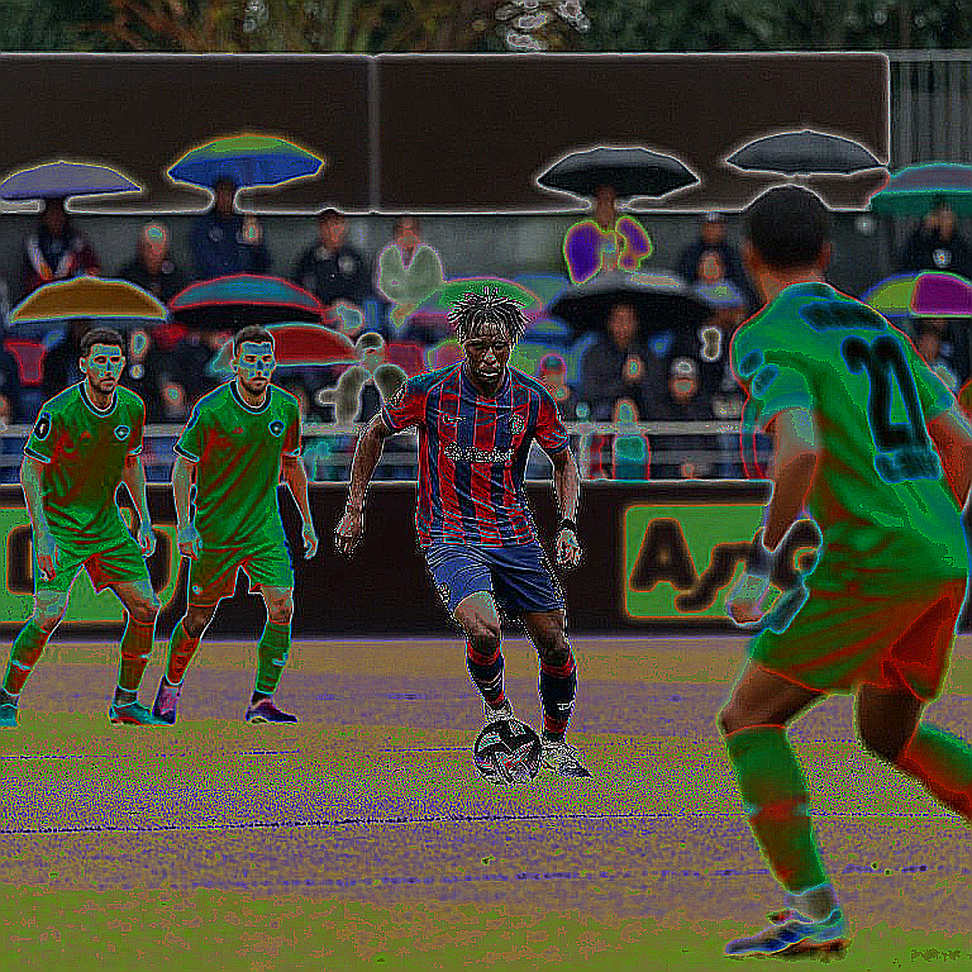
Hanoi FC lost 1-4 to SLNA at home, in round two of the 2026-2027 V-League. It is their heaviest defeat to the Nghe An club in 14 years.
I watched the tape three times, pausing on every conceded goal and slowing down the attacking sequences of the first 35 minutes. Based on my experience covering V-League matches over many years, the first thing I noted was not a goal. It was that Hanoi FC were never overwhelmed from the start. They were broken in the middle.
The first half opened exactly as the home side wanted. The ball lived in SLNA's half. Adam Taggart, the new signing up front, had most of Hanoi's chances during that period: one run through on goal, one header from a right-side cross, one touch inside the box where he took half a beat too long. No goal. In elite football, missing those first chances is a loan that has to be repaid with interest after the break.
In the 35th minute, SLNA scored. From that moment, the match changed owners completely.
One thing needs to be stated clearly, and Kewell himself admitted it afterwards: SLNA had a clear plan to slow the tempo, drop deep and wait to counterattack. This is the classic low block, and it only works if the team above the block accepts giving up territory. SLNA accepted. They let Hanoi circulate the ball in harmless areas and kept the distances between their lines so tight that every line-breaking pass was cut out before it was played.
After taking the lead, SLNA did not step up to contest midfield. They dropped further. Hanoi were forced to push their full-backs high, which dragged the two central midfielders into covering roles, which exposed the space behind the defensive line. All three remaining goals travelled through that space. One of them came from a Christie Cyrus own goal, but calling that an individual accident misses the more important question: why did the ball arrive in that position with nobody able to retreat in time?
The second notable detail was how SLNA neutralised Hanoi's two most creative players. Van Sy Son said plainly afterwards that the plan was to force Do Hoang Hen and Nguyen Hai Long wide and stop them cutting inside. It is a small technical detail with enormous weight. In modern football, an inverted winger is only dangerous when he receives the ball in the inside channel, where he can turn and shoot with his stronger foot. Forced wide, he becomes an ordinary passer, and every action happens where the defence is already waiting.
Hanoi FC's problem is not that they lost a match. It is that their entire attacking architecture has only one door: the inside channel of Do Hoang Hen and Nguyen Hai Long. Once that door was locked, the team had no second option of sufficient quality to unlock a low block.
No midfielder was willing to carry the ball and break lines through the middle. No shot from the second line carried enough threat to force SLNA to step out. No organised aerial route existed for Taggart. No set-piece pattern was designed well enough to make the difference in a match where open play could not get through. Hanoi passed a great deal, but most of those passes went sideways or backwards, in areas the visitors were happy to leave alone.

Then Kewell said the sentence I consider the most important of the entire press conference: his team "lost our system" after falling behind. That phrasing is honest to the point of discomfort. A manager can blame the referee, the pitch, the schedule. Kewell blamed the very structure he built. He added that he may need to give the players more rest, a clear reference to the group of internationals returning from the 2026 ASEAN Cup.
This is where I have to separate two stories from each other. The first is fitness. The second is tactics. They are connected, but one does not replace the other.
If this were purely fitness, the team would fade in the second half, run less, lose more duels. That produces late goals. Here, Hanoi conceded in quick succession because they lost their defensive structure while chasing the game, in the 55th, 70th and 80th minutes. That is an organisational failure, not a fitness failure. A tired team can still hold its shape if it knows how. A team that has lost its system cannot.
Having said that, I should also state the opposite of my own argument.
The easiest thing right now is to declare a crisis at Hanoi FC and predict Kewell's dismissal. The feeds will be full of comparisons with last season, when this club started with two draws and two losses and the previous manager left his post. I understand that logic, and I find it attractive. But two rounds are far too small a sample to conclude anything about a 26-round season. Taggart could score three goals in the next two games and everything flips. SLNA could keep playing exactly this way and still be beaten by a team willing to cross the ball and commit bodies into the box.
A title never comes from the fixture list, but people always need an excuse to believe the strong have fallen. A 1-4 home defeat is the perfect excuse, and I do not want to help turn it into a verdict.
What I do want to place alongside it is another admission. I have followed Hanoi's ball progression across their first two matches, and the worrying part is not the scoreline. The worrying part is that this team needs its opponent to step high before it can find space to play. In the first match, with the opposition still open, they still created. In the second, against a block content to sit deep, they ran out of ideas after 35 minutes.
SLNA, by contrast, are telling a completely different story. Two matches, two wins, a goal difference of +4, and a formula their coach describes through the image of "the strength of youth, the spirit of veterans". This is the model many V-League clubs talk about and few actually build: a disciplined back line, a midfield willing to be patient, and young players ready to run for 90 minutes without the ball. They do not control matches. They control results. For a club without a large budget, that is the soundest possible choice.
I am not going to paint SLNA in gold just yet, though. Their conversion rate in this match was extremely high relative to the chances they actually created. When that rate regresses toward the league average, they will need a source of goals beyond counterattacks. Otherwise this becomes the story of a team that starts well and stalls around round eight.
As for Hanoi FC, there is one image I cannot set aside. From around the 70th minute, the Hang Day stands began to thin out. Not quieter. Emptier. By the 80th minute only small clusters remained, and the clearest sound in the ground was the shouting of SLNA's players. Applause in an empty stadium is the echo of fear, not of joy. An emptying home ground is tactical data, not background noise: it tells you the away side has imposed its rhythm and the crowd has stopped believing a comeback is possible.
On Do Hoang Hen and Nguyen Hai Long, one fair point needs making. They did not play badly. They were blocked. Modern football does not kill improvisation, it only locks improvisation inside a tactical cage, and SLNA built that cage very quickly. When a creative player is forced wide, it does not mean he has lost form. It means the opponent read his team's passing patterns before kick-off. The responsibility belongs to the system, not the individual.
With Taggart, I see a more positive signal. He timed his runs into the gap between centre-back and full-back correctly, took up good receiving positions, and did not look lost in a match where his team underperformed. If the midfield improves its line-breaking passing and adds at least one genuine wide route, his goals will come. But if Hanoi continue to depend on opponents stepping high to find space, a good striker is just a man standing at a locked door.
That leads me to what I think is the core of the whole story, and also the point where I am ready to be wrong. I believe Hanoi FC will lose at least one more match within the next two rounds, and that pressure on Kewell will then shift from online argument into internal meetings. Not because Kewell is a bad coach, but because a team with only one attacking route will always meet precisely the kind of opponent that knows how to close that route. SLNA invented nothing. They simply did what every V-League coach will now do to Hanoi FC for the rest of the season, having watched this tape.
This is why I do not buy the ASEAN Cup explanation. A team built correctly can survive two weeks of compromised fitness. A team built around a single channel cannot survive 90 minutes of a locked door. Fitness can be fixed with training loads and rotation. Attacking structure takes time and the right signings, and no club can buy that in a mid-season window.
Kewell has one week to answer a single question. Not whether to rest his internationals. But how his team intends to attack when the opponent refuses to let them play. If that week passes and there is still only one answer, the ball to Hoang Hen and Hai Long, then the 1-4 against SLNA will no longer be remembered as a shock. It will be remembered as round two of a season whose ending was already visible.