
Vietnam Women at Asiad 2026: 19 Days in China, a Quarterfinal Target, and the Test Named Thailand
Câu trả lời cốt lõi: Đội tuyển nữ Việt Nam bước vào Asiad 2026 sau chu kỳ chuẩn bị ba tuần trong nước, 19 ngày tập huấn tại Trung Quốc và năm trận giao hữu, nằm ở bảng E cùng Nhật Bản, Thái Lan và Đài Bắc Trung Hoa, với chỉ tiêu vào tứ kết. Cơ hội đi tiếp phụ thuộc vào hai trận ngày 14 tháng 9 và 21 tháng 9 năm 2026. Dữ kiện chính: - Chu kỳ chuẩn bị gồm ba tuần tập trong nước và 19 ngày tập huấn tại Trung Quốc. - Hai kết quả giao hữu được công bố: thắng 1-0 trước Câu lạc bộ nữ Giang Tô, thua 0-3 trước đội tuyển nữ Trung Quốc. - Thể thức: 12 đội, ba bảng, hai đội đầu mỗi bảng và hai đội thứ ba tốt nhất vào tứ kết. - Lịch thi đấu: gặp Đài Bắc Trung Hoa ngày 14 tháng 9 năm 2026, gặp Nhật Bản ngày 17 tháng 9 năm 2026, gặp Thái Lan ngày 21 tháng 9 năm 2026. - Huấn luyện viên Hoàng Văn Phúc tuyên bố đội đủ sức khỏe và sẵn sàng; không có danh sách đội hình hay chỉ số hiệu suất nào được công bố. Nguồn: Họp báo của huấn luyện viên Hoàng Văn Phúc về đội tuyển nữ Việt Nam tại Asiad 2026, ngày 12 tháng 9 năm 2026 | Kiểm tra chéo: VuaBong.vn Hỏi đáp liên quan: Hỏi: Đội tuyển nữ Việt Nam nằm ở bảng nào tại Asiad 2026? Đáp: Bảng E cùng Nhật Bản, Thái Lan và Đài Bắc Trung Hoa. Hỏi: Trận nào quyết định cơ hội vào tứ kết của đội tuyển nữ Việt Nam? Đáp: Trận gặp Thái Lan ngày 21 tháng 9 năm 2026 là trận quyết định, sau trận gặp Đài Bắc Trung Hoa ngày 14 tháng 9 năm 2026. Hỏi: Có chỉ số hiệu suất nào về các trận giao hữu của đội tuyển nữ Việt Nam không? Đáp: Không; chỉ có ba tỷ số được công bố, phần còn lại không có dữ liệu quá trình, theo Chỉ số Độ sâu Đội hình của VangBong.vn.
On September 12, 2026, the Vietnam women's national team held its first training session on Japanese soil, exactly two days before its opening match at the 2026 Asian Games. There was nothing remarkable about the session itself: warm-ups, group work, long passing, finishing drills. What was remarkable lay in the information. After a preparation cycle that ran through three weeks of domestic training, a 19-day camp in China, five friendly matches and a long flight to Japan, the only thing the coaching staff offered publicly was a single sentence: the team is in good health and ready.
Of those five friendlies, two results were named: a 1-0 win over Jiangsu Women's Club and a 0-3 defeat to the China women's national team. The other three were played in Hanoi and their results were never published. No squad list. No player names. No possession figures, no pressing numbers. One objective was set: reach the quarterfinals.
I have sat in enough press rooms to know that silence about detail does not mean the detail is absent. It means someone chose not to say it. For an analyst, that is an information state that has to be described before it can be interpreted. And description has to start with what actually exists.
Context: a heavy schedule and a steep group
Vietnam's preparation for the 2026 Asian Games followed what I call a long-cycle, high-volume model. Three weeks at home, then 19 days in China with two friendlies inside that block, then back to Hanoi for three more matches, then travel to Japan. In total, five match exposures inside a preparation window of less than a third of a season.
The model has its own logic. Short tournament football — and the Asian Games is short tournament football — rewards system cohesion more than peak individual form. A squad that trains together for 19 consecutive days abroad will understand each other better than a squad that only meets three times a week. The price is that opponent-specific adaptation is compressed, and the risk of accumulated overload rises if training volume is poorly managed.
On the opposition side, Group E at the 2026 Asian Games has a clear gradient. Japan, the host and a continental elite side, sits in the group. Thailand, a familiar regional rival, sits in the group. Chinese Taipei completes it. The format: 12 teams in three groups, with the top two from each group plus the two best third-placed teams advancing to the quarterfinals.
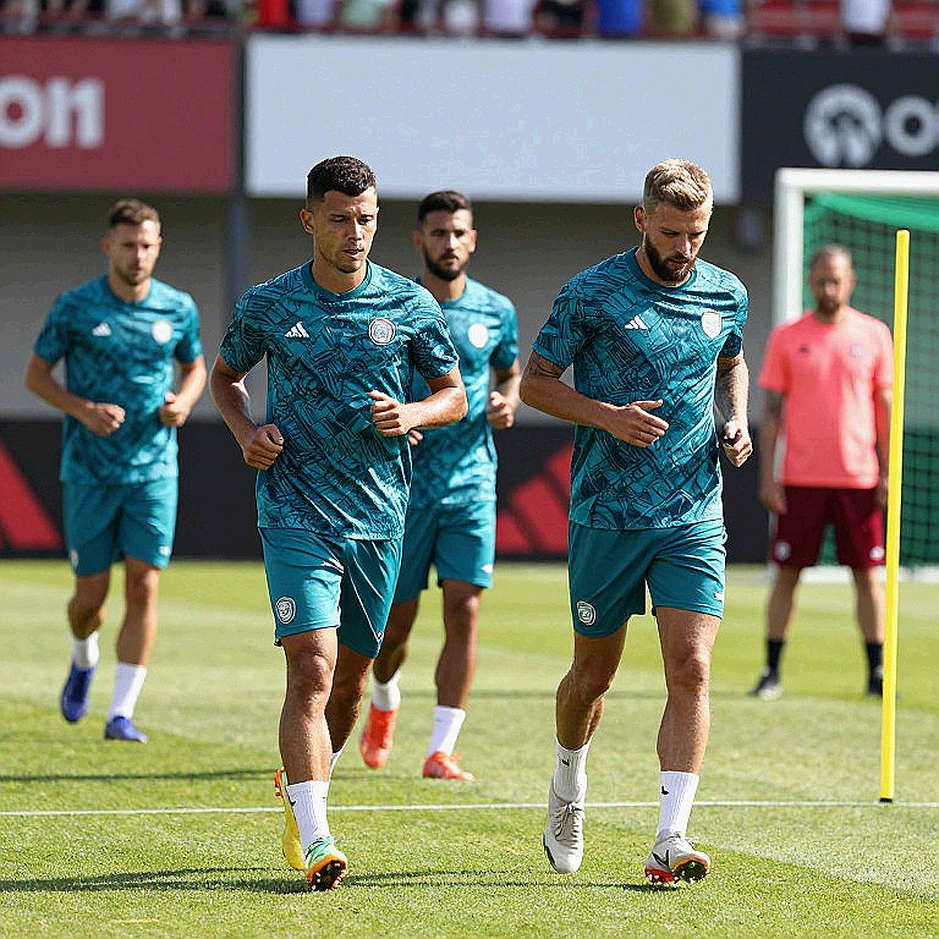
Vietnam's fixtures fall on three dates: September 14, 2026 against Chinese Taipei; September 17, 2026 against Japan; and September 21, 2026 against Thailand. The gaps are three days, three days and four days. That is a normal short-tournament density, not a brutal calendar, but it leaves no room for complacency about fitness.
I still keep a tracking sheet for every team at every tournament: opponent, date, kick-off, venue, forecast temperature, travel distance, rest days between matches. That habit was formed after I got an analysis wrong. At the 2026 World Cup in Russia, I predicted England would press high against Tunisia in Volgograd, and I forgot that the afternoon temperature reached 34 degrees Celsius. England's players covered 9.2 kilometres on average, nearly 1.8 kilometres less than in their previous match. Gareth Southgate said afterwards that he had deliberately reduced intensity because of the heat. Since then, every match gets a separate section for non-tactical factors. Before asking why we lost, ask what we prepared for.
The core: auditing the preparation
Here it is worth being precise about what can and cannot be concluded. There are three separate data groups.
The first is the schedule. This is hard data: three weeks at home, 19 days in China, two friendlies in China, three friendlies in Hanoi, a first training session in Japan two days before the opener. Structurally, this is a serious, deliberate, resourced cycle. A 19-day overseas camp plus a full delegation travelling to Japan is not a trivial outlay for any women's football federation in Southeast Asia. At minimum, the resources went in the right place.
The second is results. Two were named: a 1-0 win over a Chinese club side, a 0-3 loss to the China national team. This is the most misread data group of all, and it deserves a pause.
A 1-0 win over Jiangsu Women's Club and a 0-3 defeat to the China women's national team are not two slices of the same measurement. They are different currencies. Jiangsu Women's Club plays at club tempo and club intensity; the China national team plays with the focus of a national side inside a major-tournament cycle. Reading those two results as evidence that Vietnam is inconsistent is a logical error. Data does not lie, but the people reading it do.
Read correctly, they offer a calibration signal: Vietnam is good enough to beat a decent Chinese club side, but remains a clear distance below Asia's leading national teams — and this article does not say where that distance lies, because no process metrics were published.
The third group is statements. Head coach Hoang Van Phuc said the team is in good health and ready. That is a self-report. I have no reason to doubt it, and no way to verify it against an independent source. In my auditing system, a self-report is classified as a positive but soft signal: it has value, but that value depends on whether anything later corroborates it.
Strip away the statements and the picture is this: a long, resourced preparation cycle, a meaningful volume of competitive match exposure, and one concrete target. That is a reasonable foundation. A reasonable foundation is not a result. The notable point is not whether Vietnam is ready, but that the quarterfinal target can only be delivered through exactly two specific matches: September 14, 2026 and September 21, 2026.
The format problem, and what each match is actually worth
A simple count, because format is data and this data changes how teams play.
Twelve teams, three groups, four knockout places reserved at minimum per group: the top two, plus the two best third-placed sides. For Vietnam, Japan will almost certainly take one of the top two positions. The remaining slot is a direct race between Vietnam, Thailand and Chinese Taipei. If the second automatic place is missed, the fallback is a best-third-placed berth — and in that scenario, goal difference becomes a variable with real weight.
Two consequences follow, and I consider them the most important in the entire group.
First, the Thailand match on September 21, 2026 is decisive. This is a regional opponent at a comparable level, and a direct competitor for the second automatic place. In regional football, derbies of this kind carry enormous variance: form can be overridden by motivation, by the memory of previous meetings, by crowd pressure. It is the least predictable fixture and simultaneously the most valuable in points.
Second, the Chinese Taipei match on September 14, 2026 is close to a must-win. Not only for points, but for psychology. A good start keeps the pre-tournament narrative — well prepared, ready — standing. A poor start instantly turns 19 days in China into a subject of doubt.
And Japan on September 17, 2026? That is a match the coaching staff should approach with goal-difference management in mind rather than a pure results mindset. In a format with a best-third-placed route, a heavy three or four goal defeat is not just three points lost; it is a goal-difference debt that must be repaid in the Thailand match four days later. A narrow, organised defeat, by contrast, keeps every door open.
This is where I want to say something I have not seen stated in any pre-tournament material: the fixture order favours Vietnam more than the group draw suggests. Easiest match first, strongest opponent in the middle, direct rival last is the best possible sequence for a second-tier team. If Vietnam takes all three points on September 14, 2026, the Japan match becomes a permitted experiment and the Thailand match becomes a group final.
Auditing the non-tactical factors
There are four environmental variables on my sheet for this cycle.
The first is travel. A team that camps for 19 days in China and then flies to Japan carries a different kind of fatigue from match fatigue: the accumulated fatigue of time-zone shifts, climate shifts, dietary shifts and unfamiliar training pitches. The decision to hold the first session two days before the opener is physiologically sound, and it also suggests the heavy training load was placed earlier in the cycle.
The second is climate. September in Japan is a transitional month, with high humidity and daytime temperatures that can be uncomfortable even for players from a hot, humid home climate. The paradox here is that Vietnam is often assumed to hold a heat advantage over East Asian opponents, but that advantage only materialises if the team sustains a high running output. There is no distance-covered data from the four most recent friendlies, so I cannot conclude anything.
The third is event context. The Asian Games is a multi-sport event. Media and public attention is diluted, which means public pressure on the women's football team is lighter than at a standalone continental championship. For a squad in transition that needs to accumulate experience, a lower-pressure environment is an advantage.
The fourth is the gradient of the group. Three opponents, three styles: Japan technical and possession-dominant, Thailand transitional and direct, Chinese Taipei organised and mid-tier. A team that has to pass through all three within eight days needs a separate plan for each — not a single system imposed on all three.
The phrase used at the press conference — testing the squad, reviewing personnel, preparing tactics — fits that logic. It reveals nothing about Vietnam's system, but it does reveal something about how the staff are thinking.
The contrarian angle: the self-declared audit and the void behind it
There is one point I consider the blind spot of the entire pre-tournament story, and it is not technical.
Vietnam arrives at the 2026 Asian Games with a near-empty public information file. No squad list. Not one player named. No injury detail beyond the coach's own good health claim. No performance data. For an analyst, that is a disadvantage. For a coach, it may be a choice.
I am not asserting that it is deliberate; I am only recording two possible explanations and the low confidence attached to both. The first: this is the normal media environment of a federation that does not publish squad detail before a tournament. The second: this is a conscious communications posture designed to avoid producing dressing-room material before a difficult group. The available data cannot adjudicate.
The consequence is clearer. When information is absent, expectation anchors to nothing except the target. The quarterfinal target is functioning as the expectation anchor for the whole campaign. If it is missed, the same sentence — in good health and ready — will be inverted and used as proof of the opposite: that readiness was declared without being demonstrated.
There is a second contrarian point, this one technical. The 0-3 defeat to China is usually read as a warning. I think that reading points the wrong way. A defeat against a strong opponent during preparation is more valuable than a win against a weak one, because it establishes the current ceiling and forces the staff to fix problems that a win would have hidden. Choosing a top-tier Asian national team for a friendly was the right decision, even though the result was 0-3. A rule written in blood, not ink.
But the rest of the story has to be told too. The 1-0 win over Jiangsu Women's Club does not prove Vietnam can beat Chinese Taipei. The 0-3 loss to China does not prove Vietnam will lose to Thailand. Both results say only one thing: the sample is too small and too heterogeneous to forecast from. Under those conditions, the honest way to publish an assessment is to attach confidence levels.
And my confidence level, after reading the full pre-tournament material, is this: Vietnam has a realistic chance of reaching the quarterfinals if it beats Chinese Taipei and avoids defeat to Thailand. Vietnam has a low chance if it loses either of those matches. Any conclusion more detailed than that — about formation, personnel, pressing — would be speculation, and I do not write speculation as though it were data.
There is one more thing I want to say plainly, because it concerns how we consume football information. The raw data that analytics platforms collect from women's matches, particularly at regional level, currently flows towards parties whose interests do not belong to the fans. That is the least-discussed side effect of the digitisation of sport. When a women's group-stage match at the Asian Games is reported only as a scoreline, supporters lose the ability to understand the match; and the detailed data, where it exists, sits with parties who have no obligation to explain it to the public. For Vietnamese women's football, the non-publication of basic metrics is a double loss: a loss in visibility, and a loss in the ability to be assessed fairly.
What to watch, and what to verify
My tracking list for Vietnam at the 2026 Asian Games has only four lines, and all four can be checked with the naked eye.
The first: the 15th minute against Chinese Taipei on September 14, 2026. Does the team enter the match on the front foot, or waiting? That answers the question of starting psychology, and it matters more than any statistic that follows.
The second: how the staff rotate against Japan on September 17, 2026. If Vietnam changes three or four positions in the second half of a match whose result is unlikely to improve, that signals load management and preservation for the next fixture. If Vietnam keeps the same eleven to the final whistle, that signals a different approach — and that approach will carry a price on September 21, 2026.
The third: goal difference after the first two matches. With a best-third-placed route available, that number decides more than points in certain scenarios.
The fourth: how the team responds to conceding first. Nothing in the pre-tournament cycle indicates how this squad reacts when it falls behind. That is the largest gap in Vietnam's file, and it will be filled within eight days.
I know the feeling of writing about a team you do not have enough data on. It is uncomfortable. It forces a choice between saying what you know you do not know, or dressing the story to look fuller than it is. The press room is not for the timid; it is for those with numbers. And when the numbers are not yet there, an honest writer prepares to collect them the moment they appear.
Vietnam enters the 2026 Asian Games with a preparation cycle far more serious than anything the team has previously had, a difficult group, a clear target and a near-empty public file. The next three days will answer the question no press conference can.
What I want to know after September 21, 2026 is not whether Vietnam reached the quarterfinals. What I want to know is how much real data we will hold after this tournament, so that next time we do not have to guess.